

Fund Children, Not ICE
How Immigration Enforcement Is Harming Kids, and What Congress Must Do Now

Last week, I wrote a blog that centered around the 5-year-old child, Liam Ramos, in Minnesota, who was detained with his father by U.S. Immigration and Customs Enforcement (ICE) and sent more than 1,000 miles away to an immigration detention facility in Dilley, Texas.
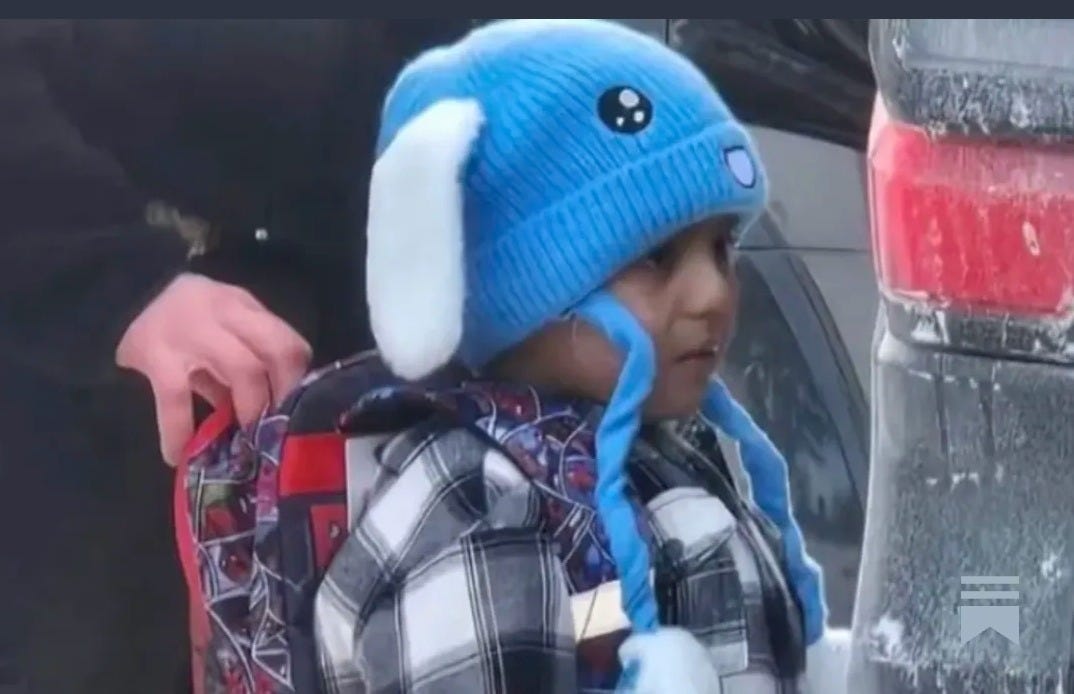
On Twitter/X, the vast majority of people who interacted with our post expressed outrage at the harm ICE is having on children like Liam.
However, some people are trying to argue that ICE is keeping Liam safe[1] and taking great care of him, others are questioning whether detention is harmful to children, and still others are hurling insults and threatening us for advocating for children.
To critics, I simply say that when government agents cause a baby to stop breathing or leave a child crying in the street, the single question that needs to be answered is how to stop the fear, harm, trauma, harassment, and abuse of children. When harm is caused by government action and policy, it needs to end and be changed immediately.
As for those claiming ICE is taking care of children and those asking for evidence of injury related to the incarceration of children in detention facilities, the evidence of harm and trauma is overwhelming.
Rep. Joaquin Castro Visits Dilley and Issues a Powerful Testimonial
First, for those concerned about Liam Ramos and other children being detained in prison-like settings, Rep. Joaquin Castro (D-TX) went to Dilley, Texas, and met with Liam Ramos and his dad.
You can hear firsthand from Rep. Castro that Liam is NOT doing well in detention (and for those concerned about Liam’s status, I would strongly encourage people to listen to what the Congressman witnessed and learned).

Liam’s school principal, Jason Kuhlman, also spoke to CBS News about his deep concerns about Liam’s situation and long-term well-being.

First Focus Campaign for Children Statement on ICE Funding
First Focus Campaign for Children (FFCC) is advocating to end this type of damage to children.
In a statement to Capitol Hill about the Homeland Security spending bill currently under debate in the U.S. Senate, we urged that Congress take action to end federal funding that facilitates harm, trauma, fear, and abuse of children that is being caused by ICE’s immigration enforcement practices.
Our statement responds to and provides information in response to the questions and criticisms that we have been receiving when we have expressed grave concern and alarm as to how actions by the U.S. Immigration and Customs Enforcement (ICE) and U.S. Customs and Border Protection (CBP) have been disrupting families, causing trauma to children, and placing young lives at risk.
Protecting children — especially those in vulnerable situations — requires policies and practices that prioritize the best interests of children, keep families together, and ensure access to services that support their well-being and safety. It is imperative that federal immigration agents withdraw from communities across the country and are held accountable for their actions, and that lawmakers enact enforceable reforms to safeguard the physical and emotional health of all children, uphold human rights, and reflect the values of compassion and justice.
We made the following recommendations:
Protect and expand the Flores Settlement, don’t dismantle it.
This decades-old agreement provides the only federal minimum standards for children while in immigration custody. Weakening it will guarantee more trauma, longer confinement, and less oversight for how kids are treated. We must strengthen, not gut, protections for children.
End child and family detention.
There is no safe or humane way to detain children beyond the short-term. Instead of pouring funding into large-scale detention facilities, we should invest in community-based alternatives that keep families together while respecting due process and human dignity.
Restore sensitive location protections.
Adopt the provisions in the Protecting Sensitive Locations Act. Schools, child care centers, hospitals, places of worship, and other child-centered community locations must be protected spaces, not sites of fear. Enforcement actions near schools don’t just harm children — they unravel trust in the institutions that help them grow.
Demand congressional oversight and accountability.
Congress must hold ICE and the Department of Homeland Security accountable for actions that harm children. Lawmakers should vote “no” on any additional ICE or CBP funding that enables family separation, expands detention, or weakens child safeguards.
Guarantee legal and judicial protections for children — and keep families together whenever possible.
Children should never face immigration court alone. Congress and the Administration must restore and permanently fund legal representation for all children in immigration proceedings, recognizing that legal counsel is not a luxury but a basic safeguard against injustice. At the same time, the federal government must exercise prosecutorial discretion to prevent the unnecessary detention or deportation of parents of minor children. Prior administrations recognized that targeting parents of young children causes profound and lasting harm — and therefore deprioritized enforcement against them, especially when humanitarian concerns were present. That approach must be restored.
Require adherence to a “best interests” standard when addressing children.
The “best interests of the child” standard is a hallmark of U.S. child protection laws. The laws of all 50 states require consideration of a child’s best interests in any decision “about a child’s custody or other critical life issues.” Our immigration system must provide a mechanism in which every child has the opportunity to have his or her best interests considered, particularly when authorities are making decisions that could result in permanent separation from family, banishment, or returning the child to a dangerous environment.
The American people have long supported such a standard for kids.
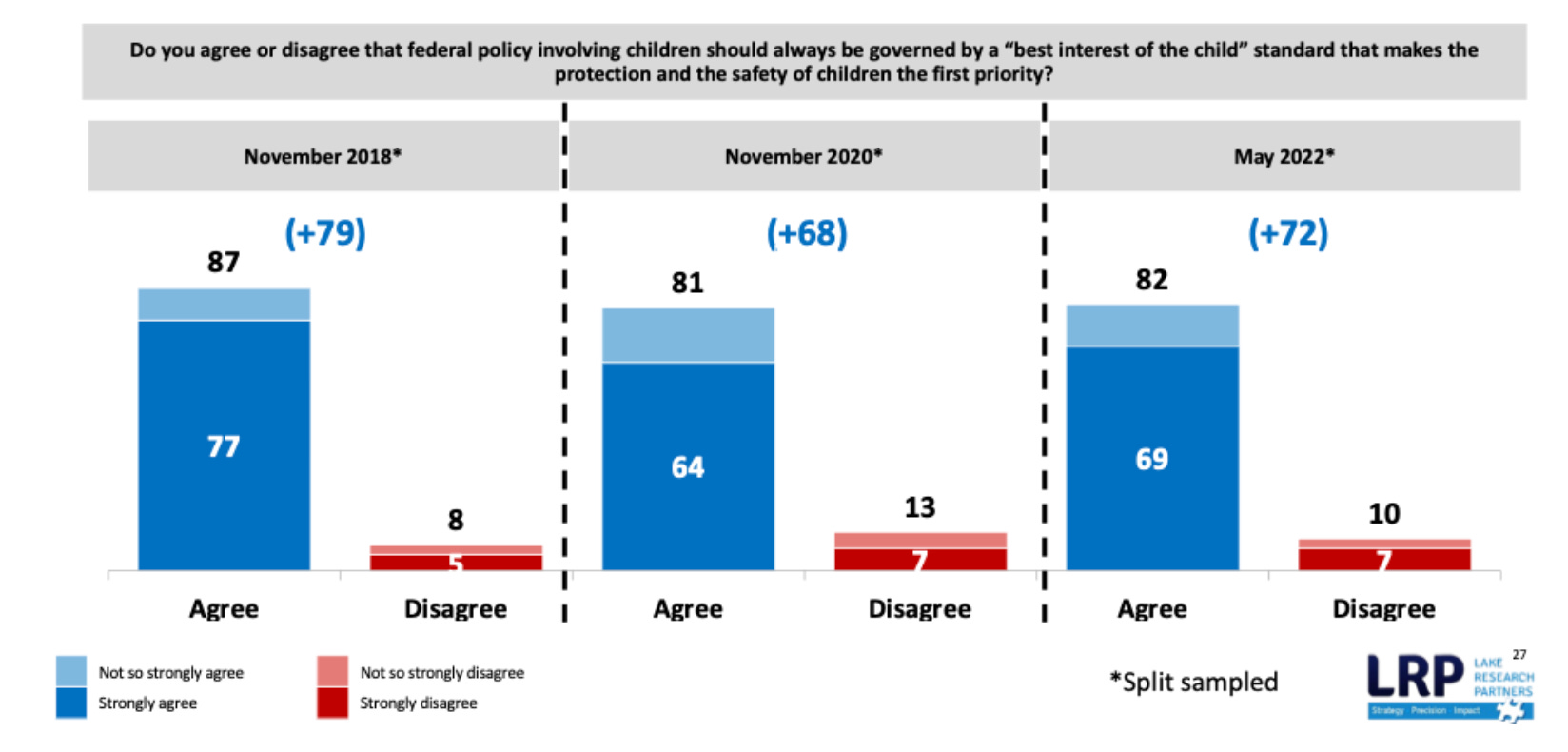
The FFCC statement is not intended to be an exhaustive list of reforms. It is intended to raise awareness of and focus on some of the unique issues important to children in this debate.
Our partners at the Center for Law and Social Policy (CLASP) and the National Immigration Law Center (NILC), and others have raised additional critically important issues we support — including racial profiling, warrantless arrests, and home invasions — which deserve urgent attention alongside child-specific reforms. First Focus Campaign for Children strongly supports those recommendations as well.
Again, our statement seeks to raise attention to some child-focused issues that often get lost in broader policy debates.
As the Children’s Equity Project’s report, The Impacts of Family Separation and Deportation on Children, points out:
While much rhetoric surrounds immigration policy, the cost to children is rarely centered, even though research is wide ranging, consistent, and well-established.
When it comes to the federal budget, we are calling on Congress to fund children and not ICE. The Department of Homeland Security (DHS) desperately needs a leadership change, significant cuts, and desperately needed reforms before Congress allows the DHS appropriations bill to proceed.
What Is the Harm? Evidence Demonstrating the Damage to Children
When DHS makes decisions that impact children, as with every government agency and policymaker, they should adhere to a “best interests of the child” standard. Such a standard is not just a moral imperative — it is a well-documented, evidence-based recommendation. It should also effectively incorporate many of the issues important to children into all immigration enforcement activities.
First Focus on Children has provided guidance on why this is important:
Because of their age, dependency, maturity, and lack of mechanisms to make the case for their own interests and needs, children depend on adults in society and government to support of their health and wellbeing. Without a clear mandate to consider their needs, children will continue to be disregarded in policy decisions that impact their lives and well-being. A “best interests of the child” standard would make positive outcomes for children a major objective of policymaking and create a benchmark through which all policies can be evaluated.
Cruelty and disregard should never be the point of government policy and action.
Unfortunately, through detention, family separation, and many of the enforcement actions they have chosen, ICE and CBP immigration enforcement activities have been repeatedly glorified by Administration officials, such as DHS Secretary Kristi Noem, even though they are having devastating impacts on children.
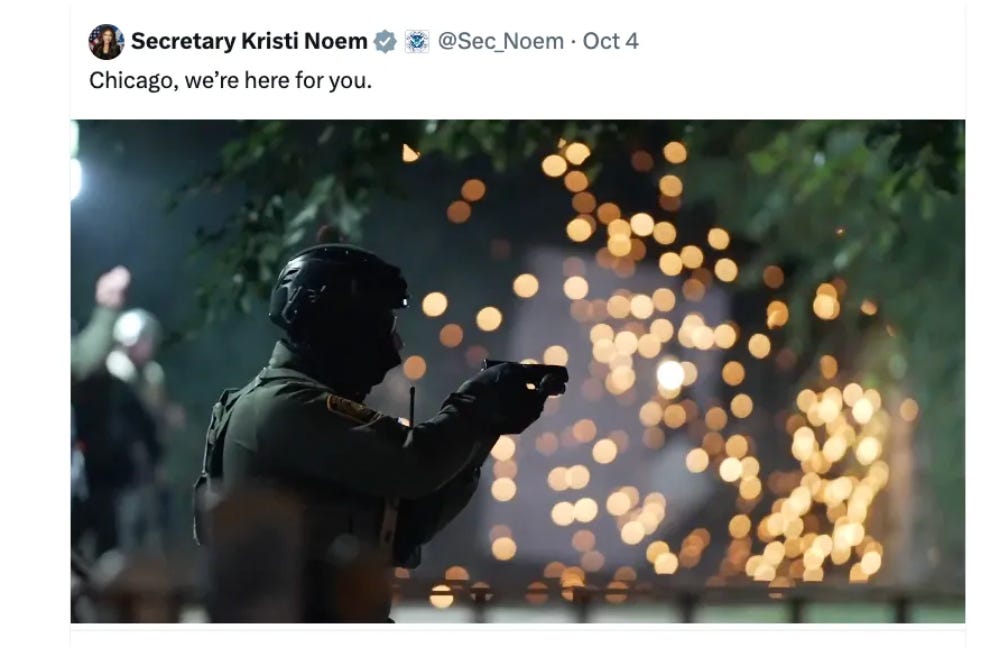

The following are examples of the mounds of evidence[2] as to why our government, its agents, and our tax dollars should never be used to traumatize, warehouse, and terrorize children.
1. Children Are Directly Harmed in Enforcement Actions
Children are not just incidental to many types of immigration enforcement measures — they are directly affected by it.
In multiple documented incidents over the last few weeks, federal immigration agents have carried out enforcement operations in places where children should feel safest — their homes, schools, child care centers, and neighborhoods. This includes cases of:
5-year-old Liam Ramos being taken away from his family, his home, his friends, his school, his friends, and his community in Minnesota to be flown over 1,000 miles away to a detention facility in Dilley, Texas;
An 6-month-old infant who stopped breathing with ICE rolled tear-gas into his family’s vehicle; and,
A 6-year-old girl who was left wandering the streets in New Jersey looking for her father, “Papi”, after he was apprehended by ICE outside his home when he tried to get food that had been delivered to the home.
These are just three of many stories documented by the Children Thrive Action Network. Harm and trauma to children are taking place hourly in Minneapolis and other communities all across this country. These stories are symptoms of an enforcement strategy by ICE that has also expanded operations to schools, child care centers, churches, hospitals, and residential neighborhoods, which have long been places that have been off-limits or reasonably safe from federal law enforcement operations.
These ICE activities have been intentionally cruel and are intended to “send a message.” However, the reckless encroachment of immigration enforcement into the lives of children, including very young ones, has profound and traumatic life-long consequences for their sense of safety, their trust in adults, and their ability to develop normally.
2. Fear and Trauma Are Spreading Through Schools and Communities
When enforcement operations occur around children, the harm has repercussions that often ripple outward well beyond the kids directly detained.
In schools all across this country, teachers and school officials have reported intense fear in classrooms where students see or hear about enforcement actions. Some children have panic attacks or struggle to concentrate, and schools have resorted to emotional support, altered lesson plans, and even remote learning to cope with the trauma.

Report: Rogers, J. (2025). The Fear Is Everywhere: U.S. High School Principals Report Widespread Effects of Immigration Enforcement. USLA’s Institute for Democracy, Education, and Access.
In some locations, the mere fear of ICE presence has kept children from attending school at all. Educators describe students as sad, withdrawn, and disengaged — struggling not just academically but emotionally because of what they’ve seen or feared might happen to their families.
Researchers and psychologists rightly frame this as toxic stress — a level of chronic fear and insecurity that produces real neurological and physiological impacts on children’s development.
The Children’s Equity Project at Arizona State University found that fear of immigration enforcement, family separation, and deportation undermines children’s development, educational attainment, economic security, and long-term health — even among those not directly detained.
State University of New York (SUNY) professors Joanna Dreby and Eunju Lee add:
The enforcement tactics ICE is using in Minnesota and other places in the U.S. today are likely, our research suggests, going to harm the next generation of U.S. citizens and residents.
As trauma researchers have long known, our bodies keep score over a lifetime. The question facing policymakers is not whether these enforcement tactics will cause lasting harm – our research suggests they would – but what human costs we, as a nation, are willing to bear.
Again, we should never accept that our government and our tax dollars are being used to harm children.
3. Long‑Lasting Mental Health Impacts Are Well‑Documented
Exposure to immigration enforcement, whether through direct detention or through witnessing a parent’s arrest, is linked with a range of mental and emotional problems that don’t just go away.
In fact, research shows that children whose parents are arrested, detained, or deported often experience separation anxiety, hyperactivity, school absenteeism, and other behavioral issues. These effects frequently persist into adulthood.
Chronic exposure to these kinds of traumatic events in childhood — referred to as adverse childhood experiences (ACEs) — is linked with life-long risks to mental health, immune function, chronic disease, and behavior. These are not just short-term stress reactions, as they are predictors of adult health outcomes.
Research in child development also clearly shows that forceful separation from caregivers and prolonged stress radically alter brain development, increase the risk of PTSD, anxiety, and depressive disorders, and can weaken emotional regulation and attachment stability.[3]
What this means is that harm caused today isn’t just “emotional sadness” — it is biological and developmental injury.
4. Enforcement Erodes Safety and Stability — Core Conditions Children Need to Thrive
Child development science is unambiguous: children thrive in safe, predictable, and nurturing environments. When a child’s home, school, and community become sources of fear instead of security, their growth is compromised.
Children in mixed‑status immigrant families, which is the case for 1-in-4 children (or an estimated 18.4 million kids) in this country, already face heightened risk for trauma simply because their parents’ immigration status makes the family vulnerable to sudden disruption.
However, when enforcement operations occur near schools, daycares, emergency rooms, and even homes, children internalize the message that nothing in their lives is stable. They may fear separation from their caregiver, fear a police approach, fear losing their home, and fear losing their friends and community. That fear isn’t theoretical; educators and clinicians see it every day.
Every child’s flourishing depends on stable attachments with parents and caregivers. Every major professional organization in child health and development recognizes that separation and traumatic stress undermine that foundation — often permanently.
And when it comes to the court system, the disregard for children and its failure to recognize children’s unique needs is described by immigration law experts Sarah Diaz and Oneida Vargas as creating an immigration legal system that normalizes “sustained systemic violence.”[4]
This process by which children experience the U.S. immigration system is further described by law professor Laila L. Hlass as the “slow death of childhood.”[5]
5. ICE and CBP Are Also Harming Children by Denying Them Needed Health Care
The Department of Homeland Security and its agencies, ICE and CBP, are also actively detaining and incarcerating children like Liam in centers across the country. The detention of children grew exponentially in 2025, and the rapidly established facilities and staff who are supervising children lack health care training, lack expertise in pediatrics and childhood development, and even worse, don’t seem to be bothered that their actions and lack of care are threatening the lives of children.
There have been reports of them deporting children (even U.S. citizen children) with cancer, stopping and detaining children on their way to medical appointments, and failing to provide children with necessary health care services while in their care.

In addition to detaining and deporting children with health care issues that threaten their lives, insanitary conditions, poor nutrition, and the lack of medical care and services in detention facilities further threaten the health and well-being of children.
Earlier this week, the Government Accountability Office (GAO) issued a new report on some of these issues. Among the many findings by GAO:
Medically high-risk children are not checked in the required time 43% of the time
CBP agents and officers are not trained to recognize medical distress in children
Personnel lacks the training and expertise related to pediatrics and child development
In Short: The Harm Is Real, Measurable, and Profound
Children caught up in immigration enforcement – whether directly detained, witnessing their parents’ detentions, or living in sustained fear – are experiencing:
Direct trauma and stress during enforcement actions
Fearful disruptions to education and normal life, causing emotional and academic consequences
Long‑term mental health impacts tied to attachment disruption and toxic stress
Deteriorating trust in otherwise protective systems like schools and healthcare
These are not random anecdotes. They are documented patterns with clear evidence of maltreatment.
As Anya Kamenetz writes:
When I think about the victims of our current reign of terror, I think about children.

Final Words: Children Deserve Safety — Not Surveillance and Detention
Children do not deserve to be terrorized by government agents pointing guns at them or their parents. Children do not belong in detention. They do not belong in court without a lawyer. They do not deserve the disdain and maltreatment they are getting from our government.
Congress must act now to protect children. That means:
Preserving the Flores Settlement, which requires fundamental health, safety, and well-being standards be enforced when children are in government custody
Ending child and family detention
Protecting sensitive locations like schools, churches, and health clinics
Restoring oversight and accountability of DHS and ICE
Guaranteeing legal counsel for all children in immigration court
Centering the “best interests of the child” standard in all decisions
Adopting a “Best Interests of the Child” Standard
On this final point, adopting a “best interests of the child” standard is a moral imperative, as it is a well-documented, evidence-based recommendation. It should also effectively incorporate many of the multitude of issues that are important to children in all immigration enforcement activities.
As one of the most respected child advocacy organizations working directly with unaccompanied and detained children, the Young Center for Immigrant Children’s Rights underscores why this standard must guide our laws and policies:
…we believe that a child-centered, child’s-rights based best interests standard is necessary to ensure the fair and just adjudication of children’s claims to protection. Such a standard could prevent the government from placing children in custody unnecessarily and protect children without family in the U.S. from being harmed in government custody while requiring that the government foster children’s safe and healthy development as they navigate the immigration process.
In the end, our government and our tax dollars should never be used to inflict trauma and harm on children that will echo throughout their lifetimes.
Our government should always put the best interests and well-being of children first in any policies, decisions, actions, or activities in which kids are impacted.
Congress has a choice: fund cruelty, or fund care for children. We must choose children.
What You Can Do
Call or write your senators and Member of Congress and demand that they protect funding for children and reform the Department of Homeland Security to protect children from harm.
Subscribe to Speaking of Kids, and please consider upgrading to a paid subscription, because kids can’t vote, but with your support, we can help advocate for them.
Join us as an Ambassador for Children and help raise the problems and needs of kids to the attention of lawmakers.
ENDNOTES
[1] Liam Ramos is not in ICE custody at this point. He was taken by ICE and is now incarcerated at a detention center in Dilley, Texas, which is operated by CoreCivic, a private, for-profit company which received a no-bid contract from the Department of Homeland Security to open detention centers across the country. PBS News reports that CoreCivic CEO Damon Hininger said on an earnings call this past summer with shareholders, “Never in our 42-year company history have we had so much activity and demand for our services as we are seeing right now.”
[2] Young, J., Binford, W., Bochenek, M.G., & Greenbaum, J. (2024, Mar.). Health Risks of Unaccompanied Immigrant Children in Federal Custody and in US Communities. American Journal of Public Health. 114:3, 340-346; Palomino, C., et al. (2025, May). The Impacts of Family Separation and Deportation on Children’s Health, Mental Health, Economic Conditions, Development, and Education. The Children’s Equity Project at Arizona State University. https://cep.asu.edu/resources/ImpactsofFamilySeparationandDeportation; Edyburn, K. & Meek, S.E. (2023, Mar.). Preventing family separations and detention in the U.S. immigration system. The Children’s Equity Project at Arizona State University. https://cep.asu.edu/resources/preventing-family-separations-detention; Dreby, J. & Lee, E. (2026, Jan. 28). “There are long-lasting, negative effects for children like Liam Ramos who are detained, or watch their parents be deported.” The Conversation. https://theconversation.com/there-are-long-lasting-negative-effects-for-children-like-liam-ramos-who-are-detained-or-watch-their-parents-be-deported-274271; Dreby, J. (2025). Surviving the ICE Age: Children of Immigrants in New York. Russell Sage; Lee, E., et al. (2025, May). Childhood immigration enforcement exposure in young adults’ anxiety: A mixed methods study. Children and Youth Services Review. 172, 108276. https://doi.org/10.1016/j.childyouth.2025.108276; American Immigration Council. (2021, Jun. 24). U.S. Citizen Children Impacted by Immigration Enforcement. https://www.americanimmigrationcouncil.org/fact-sheet/us-citizen-children-impacted-immigration-enforcement/; Mares, S., & Ziersch, A. (2024). How immigration detention harms children: A conceptual framework to inform policy and practice. Psychological Trauma: Theory, Research, Practice, and Policy, 16(Suppl 2), S367–S378. https://doi.org/10.1037/tra0001474; Danaher, F., et al. (2022). Collateral Damage: Increasing Risk to Children in a Hostile Immigration Policy Environment. Current Pediatrics Reports. 10:260-265; Cervantes, W., Ullrich, R., & Matthews, H. (2018, Mar.). Our Children’s Fear: Immigration’s Policy’s Effects on Young Children. Center for Law and Social Policy. https://www.clasp.org/wp-content/uploads/2022/01/2018_ourchildrensfears.pdf; Government Accountability Office (GAO). (2020, Jul. 14). Southwest Border: CBP Needs to Increase Oversight of Funds, Medical Care, and Reporting of Deaths, GAO-20-536. https://www.gao.gov/products/gao-20-536; GAO. (2026, Jan. 26). CBP Should Improve Oversight of Medical Care for Individuals in Custody. GAO-26-107425. https://files.gao.gov/reports/GAO-26-107425/index.html.
[3] Ibid.
[4] Diaz, S. J. & Vargas, O. (2023). Denormalizing Harm to Migrant Children in the U.S. Immigration System: A Comparative Perspective. Children’s Legal Rights Journal. 43:2. https://lawecommons.luc.edu/cgi/viewcontent.cgi?article=1273&context=clrj.
[5] Hlass, L. (2025, Jul.). The Slow Death of Childhood for Immigrant Youth. Harvard Law & Policy Review. 19:539.